

Novel Study Guides >
Grades 4, 5, 6, 7 >
Little House on the Prairie
Little House on the Prairie
Grades 4 to 7 - eBook - Lesson Plan



Order #: RHPA29
ISBN13: 978-1-55319-453-8
Grades: 4, 5, 6, 7
Reading Level:
Screen Pages: 4-7
Total Page: 79
Author: Sonja Suset
Tweet
Description
**THIS IS AN INSTANT DOWNLOAD**
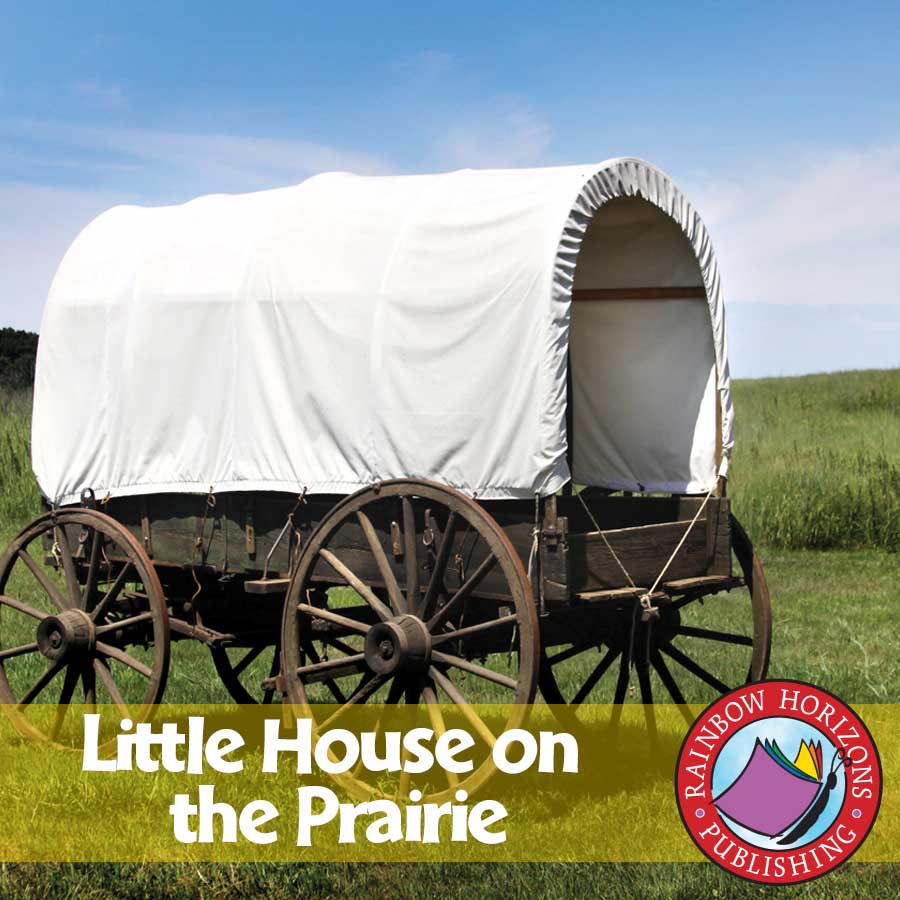
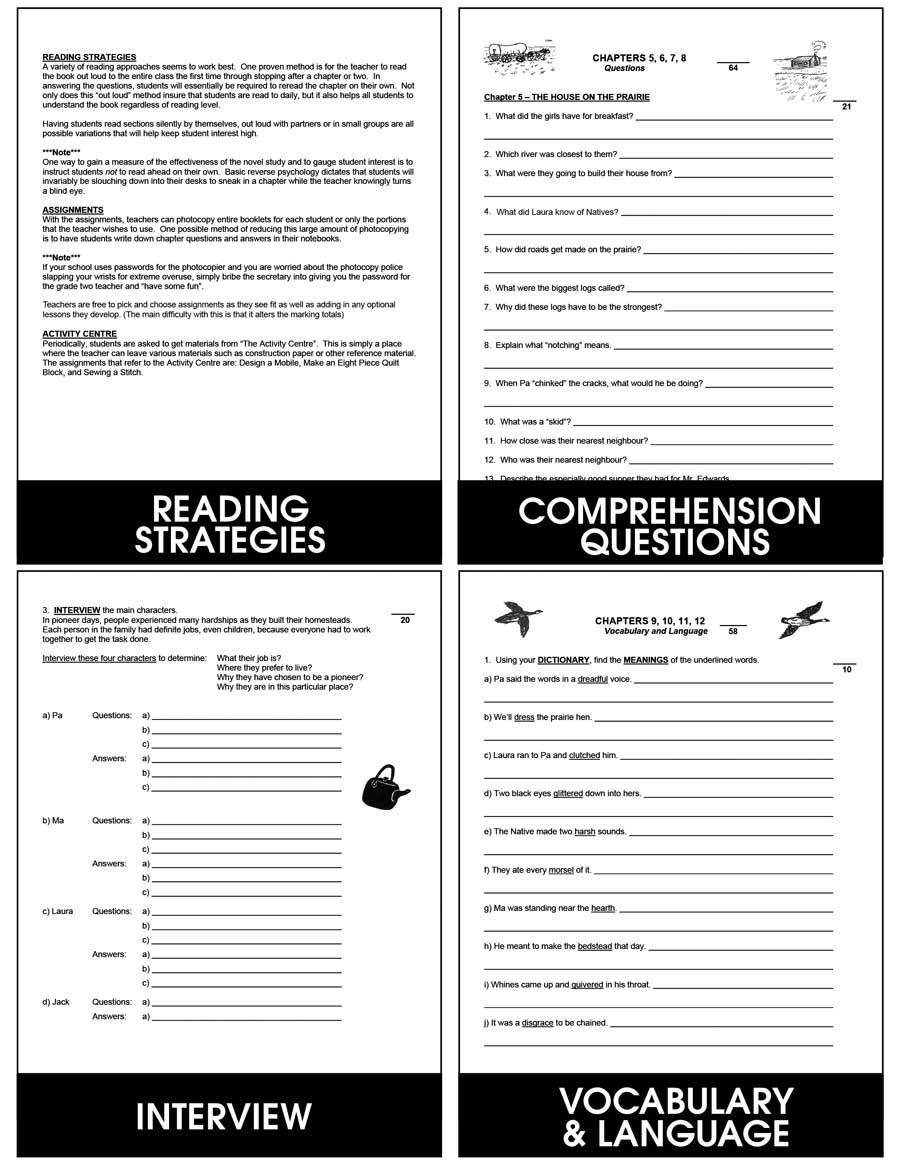
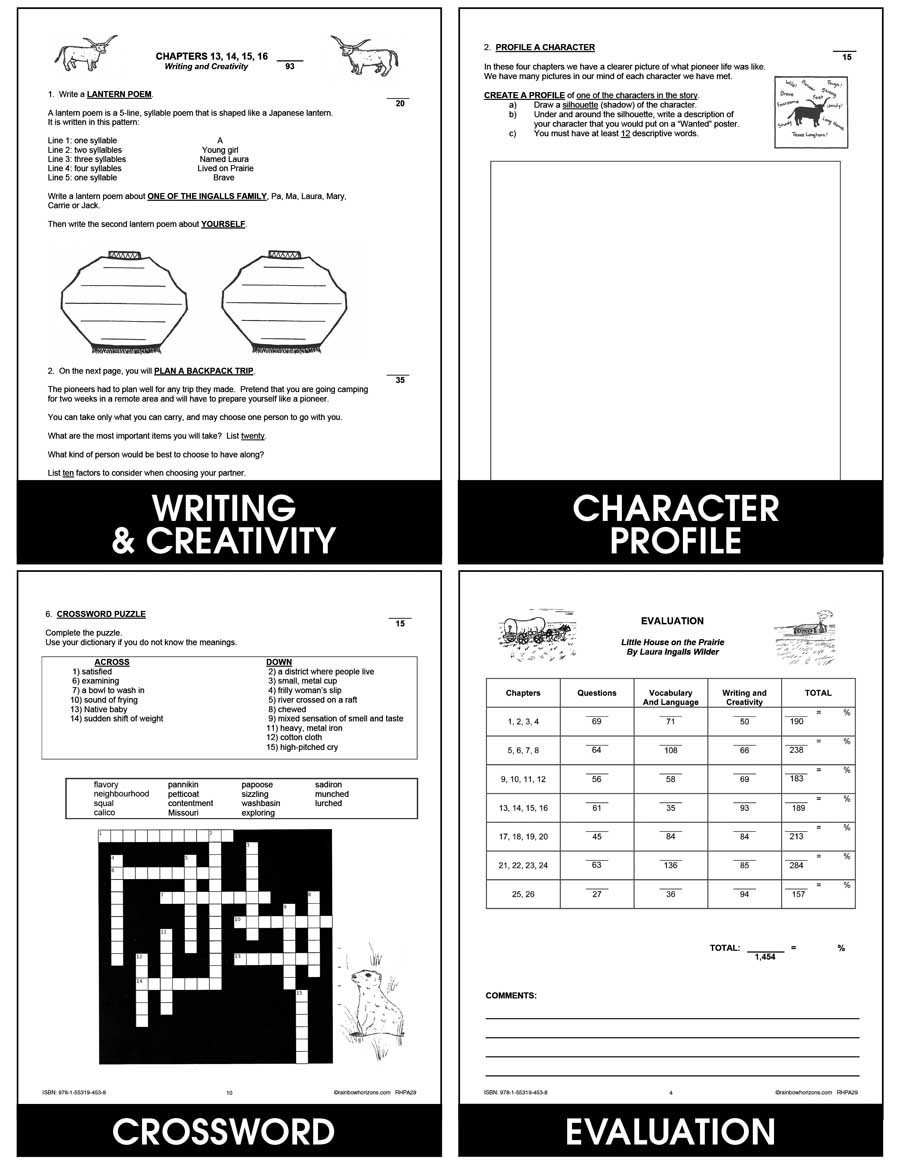
Little House on the Prairie follows the Ingalls family as they lived on the Prairies of Kansas. The family are encountered with danger as they are stricken with malaria and the Osaga tribe who live and own the land. Our unit provides teachers with a highly structured format for teaching language arts as students develop a love for reading longer materials like novels. Various areas such as reading comprehension, vocabulary development, spelling, grammar, and writing are all entwined in this integrated approach eliminating the need for teaching these skills separately. This Novel Study provides a teacher and student section with a variety of activities, chapter questions, crossword, word scrabble, and answer key to create a well-rounded lesson plan.
Little House on the Prairie follows the Ingalls family as they lived on the Prairies of Kansas. The family are encountered with danger as they are stricken with malaria and the Osaga tribe who live and own the land. Our unit provides teachers with a highly structured format for teaching language arts as students develop a love for reading longer materials like novels. Various areas such as reading comprehension, vocabulary development, spelling, grammar, and writing are all entwined in this integrated approach eliminating the need for teaching these skills separately. This Novel Study provides a teacher and student section with a variety of activities, chapter questions, crossword, word scrabble, and answer key to create a well-rounded lesson plan.
Product Reviews
Julie Thomas
This is a fantastic resource! It was an absolute life saver and super detailed!
Ameenah Issa
This is helpful and kept me organized!
Cathy Jackson
I love starting the year out with this book!
Elizabeth Doing
Purchased to use with Guided Reading groups - very complete and easy to use!
S.Davidson
Great unit! Students loved it.
W. Nave
Loved it!
L. Henn
Made my life so much easier!